From publishing books to flying airplanes, here is a list of top inventors whose inventions have helped us live better.
Scientists or inventors? Who made a bigger impact on the world? It’s hard to choose one of the two. Both scientists and inventors have played a pivotal role in shaping the modern world. While scientists study and elaborate laws of nature, inventors use those laws to devise machines to help us live better. In this way, the role of scientists and inventors in shaping the modern world is often intertwined.
In our last post, we covered the lives and achievements of six famous scientists. In this post, we are going to study how various inventors and their inventions helped shape the modern world. So let’s get started.
1. Johannes Gutenberg (1400-1468)
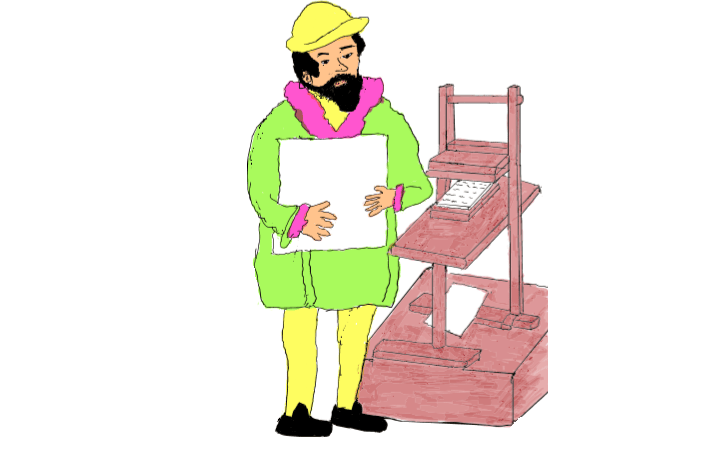
Johannes Gutenberg was a German inventor who is credited with inventing the first movable type printing press in Europe. Though printing presses were already being used in East Asia, Gutenberg’s press enabled faster printing. Gutenberg’s printing press later spread to various parts of the world, enabling mass printing of books, ushering the world into an information revolution.
Very little information is available about Gutenberg’s life and achievements so it is hard to say anything about what else he might have invented. However, the invention of printing press alone was an achievement so big that it influenced human life for centuries that followed. Paper printing has evolved greatly since Gutenberg’s time, but you can still thank him every time you read a book or a newspaper.
Sometimes considered as the greatest invention of all times, Gutenberg’s printing press enabled mass printing of books that helped spread information and ideas at a faster pace.
2. James Watt (1736-1819)
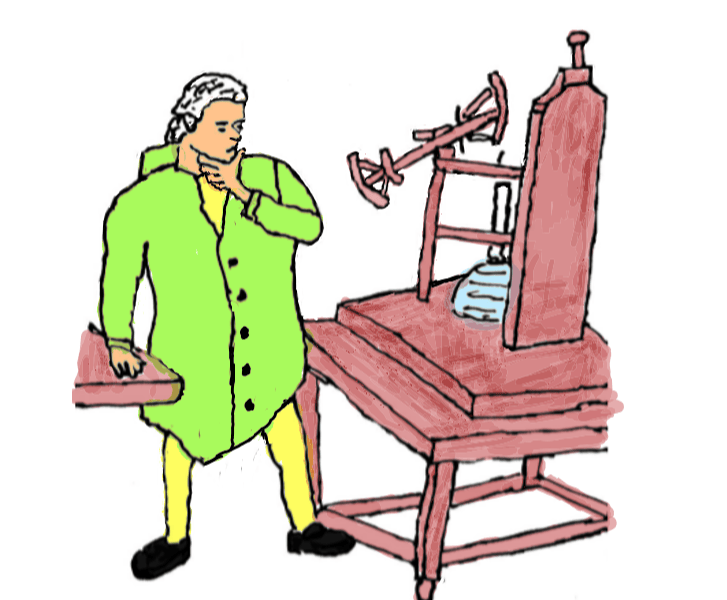
James Watt was a Scottish inventor and engineer who is considered one of the most important figures in relation to the Industrial Revolution, his main contribution being development of steam engine. Though he didn’t invent the steam engine, he made significant improvements to Thomas Newcomen’s steam engine.
Watt’s achievements include:
- James Watt invented a separate cooling chamber, called condenser to keep the main engine cylinder hot. This improvement saved a lot of energy.
- Watt’s design used half the fuel and produced twice the power compared to older engines.
- Before Watt’s improvements, steam engines were mainly used to pump water. Watt adapted the engine to run in repeatable cycles. This allowed factories to use steam in a continuous operation to power all kinds of machines, not just for pumping water.
James Watt’s steam engine improvements were vital to kickstart the Industrial Revolution in Great Britain. Apart from redesigning the steam engine, Watt helped develop the concept of horsepower to measure engine power. In those days, horses were used for laborious tasks such as lifting water; Watt coined the term horsepower to compare his engine’s performance to those of horses. Though the scientific unit for power in use today is Watt (in the honor of James Watt), horsepower is still commonly used to indicate power of automotive engines.
James Watt’s steam engine improvements were instrumental for the Industrial Revolution and subsequent progress.
3. Alexander Graham Bell (1847-1922)
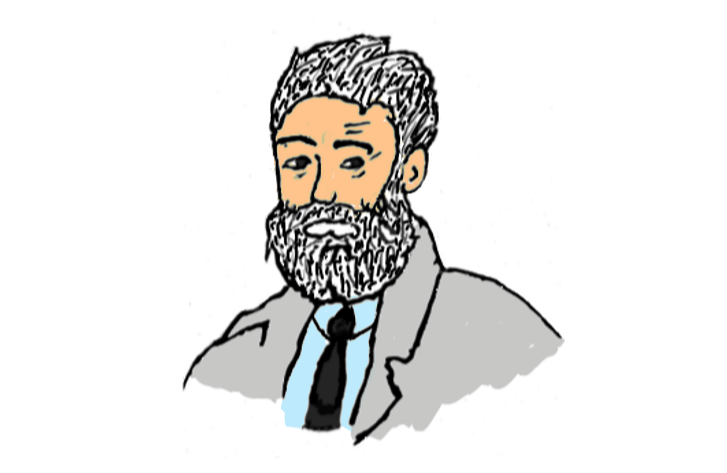
Alexander Graham Bill was born in Scotland, but later moved to Canada, and then America. Both his mother and wife were deaf, so Bell spent most of his life teaching oral education methods to deaf students, including famous writer Helen Keller. In 1875, he succeeded in transmitting human speech over electric wires thus inventing the first telephone.
Apart from inventing telephone, Bell’s other inventions include:
- Photophone: A device that transmitted sound on a beam of light, serving as an early ancestor to fibre optics.
- Metal Detector: An early electrical probe designed to find bullets inside wounded people.
- Graphophone: An improved version of the phonograph for recording and playing sound.
With modern cell phones in our hands, we have come a long way from a conventional telephone, but Alexander Graham Bell is still regarded as the father of telephone technology.
Though we have smart phones today, Alexander Bell’s invention of telephone was a historic achievement for long distance communication.
4. Thomas Edison (1847-1931)
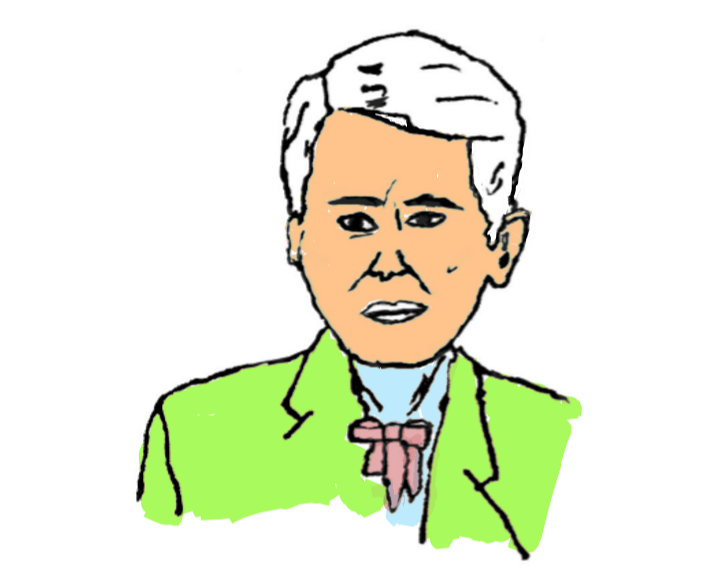
Thomas Edison was an American inventor who is often considered one of the greatest inventors of all times. Edison’s first patent was the invention of a vote recorder when he was only 22 years old. Edison and his team developed many other inventions in his Menlo Park laboratory; however, his most famous invention was incandescent light bulb.
Just like James Watt who didn’t invent the steam engine but improved upon an existing design, Edison wasn’t the first person to make a light bulb. However, he successfully developed a practical, long lasting incandescent light bulb, and creating an electrical utility system to power it.
Edison’s other achievements include:
- He invented the first machine that could record and play back sound, which brought him worldwide fame as the “Wizard of Menlo Park”.
- He developed early power distribution system. He also played a part in building early commercial power plants, like the Pearl Street Station, to deliver electricity to everyday homes and businesses.
- He developed key elements of early motion picture cameras and viewing equipment.
- He improved telephone sound quality so long-distance calls became practical.
- In his lifetime, Edison held a total of 1,093 patents, making him the most prolific inventor of his time.
What made Edison different from other inventors was his ability to turn inventions into practical devices. He wasn’t just an inventor; he was a businessman as well. Though he often gets credit for all his inventions, he had a team of smart, hardworking people who worked for him. One of those workers were Nikola Tesla who is next on our list.
Edison is famous for his light bulb but he contributed to the development of many other useful devices including sound players, cameras, and power plants.
5. Nikola Tesla (1856-1943)
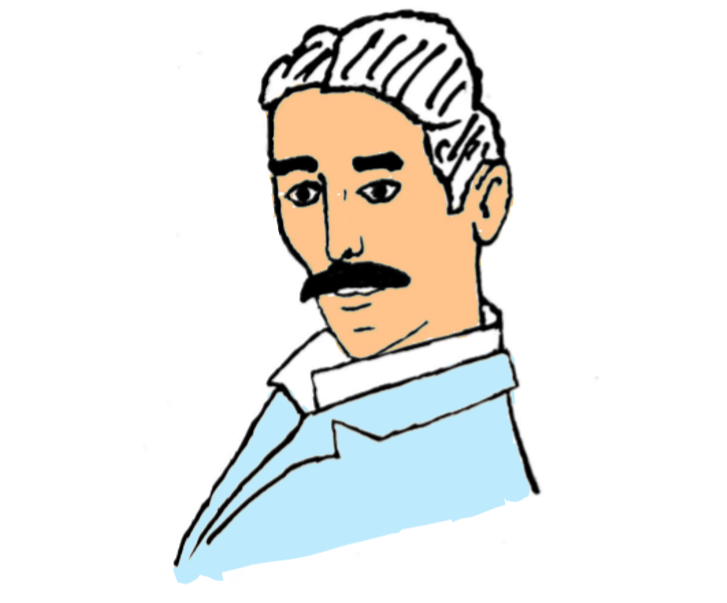
Nikola Tesla was born in modern day Croatia but later migrated to the United States. After moving to America, he worked for Thomas Edison for a little while before branching out on his own. He later partnered with George Westinghouse, a wealthy businessman who was competing with Edison’s power supply business. Partnering with Westinghouse, Tesla won many laurels including defeating Edison in what came to be known as the “War of Currents” .
Tesla’s main achievements include:
- Partnering with George Westinghouse, Tesla defeated Thomas Edison in “War of Currents”. While Edison had invented his Direct Current (DC) system for power distribution, Tesla developed Alternating Current (AC) generator, motor, and transformer technologies. During the 1893 Chicago World’s Fair, Tesla famously used AC to illuminate light bulbs successfully and safely. He also successfully demonstrated his AC system to power the Niagara Falls hydroelectric plant in 1895.
- In 1891, Tesla invented high-voltage, high-frequency transformer. This invention became instrumental for developing wireless technologies later on.
- Tesla laid the groundwork for radio frequency transmission which led to the invention of radios. While Guglielmo Marconi was initially credited with inventing radio, the US Supreme Court upheld Tesla’s patent priority in 1943.
- In 1898, Tesla demonstrated a remote-controlled robotic boat at Madison Square Garden, pioneering the fundamental concepts of remote control and wireless robotics.
- Tesla had a vision of a world with free, global wireless electricity. For this purpose, he began building a 187 feet tall transmission tower in a small New York village. The tower was named “power tower”. However, before he could demonstrate his idea, there was no money left to complete the tower. So his dream of a wireless world couldn’t be turned into reality. The tower was unceremoniously demolished in 1917.
Over his lifetime, Tesla accumulated over 300 patents but died penniless in New York. Despite his sad ending, Tesla is regarded as an underrated genius whose ideas were too grand for anyone to finance.
Though his vision of wireless electricity couldn’t be turned into reality, Tesla laid foundation for electrical power technology, radio transmission, and robotics.
6. Wright Brothers (Wilber Wright, 1867-1912; Orville Wright, 1871-1948)
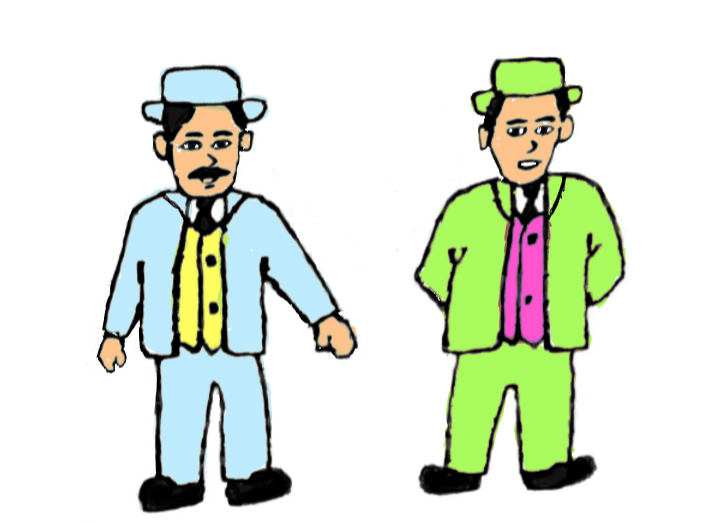
Wilbur Wright and Orville Wright were two American brothers who are considered the pioneers of aircraft technology. They were bicycle mechanics by trade. The two brothers had different personalities but complemented each other perfectly. Wilber, the older brother was an avid reader, a talented writer, and a gifted speaker. Compared to Wilber’s solemn and steady personality, Orville, the younger brother was impulsive and energetic.
The Wright Brothers started researching their ideas of air flight around 1899. They started their testing by flying kites and gliders. It took them another four years to perfect their experiments, and on the historic day of 17th December 1903, they succeeded in flying the first controlled, sustained powered flight at Kitty Hawk, North Carolina.
Before the invention of airplanes, it took months to travel from one continent to another. Thanks to the Wright Brothers and their tireless efforts, we can travel from one corner of the world to another within days, even hours.
Before the invention of airplanes, long distance travel took months, sometimes years. Wright Brothers’ invention of airplanes reduced that time to days, even hours.

