Living in the twenty first century, we enjoy many luxuries. No doubt, technology has made our lives much more convenient. But before these technologies were developed, several scientists spent the better parts of their lives studying the world and developing scientific laws that enabled the technologies we enjoy at present. Here is a list of six most influential scientists that helped shaped the modern world.
Galileo Galilie (1564-1642)
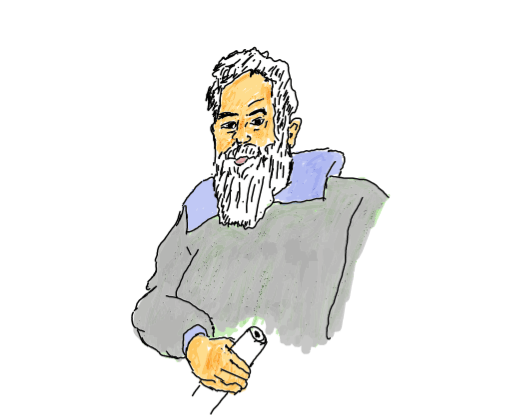
Galileo Galilie was an Italian scientist and astronomer. He is often considered the pioneer of the scientific method that helped pave the way for the scientists that came after him. His other scientific contributions include:
- Galileo showed that objects fall at the same speed regardless of their weight. To prove his point, Galileo conducted an experiment in public. He dropped two objects— one heavier than the other— from top of the leaning tower of Pisa. The older belief was that the heavier object would land first. But Galileo demonstrated that both heavier and lighter objects land at the same time (ignoring air resistance).
- Galileo made many significant discoveries in astronomy. He upgraded the early spyglass to magnify objects up to 30 times. He made his own telescopes which he used for watching the skies.
- Looking at the moon with his telescope, Galileo pointed out that moon’s surface wasn’t smooth, rather it had craters and mountains.
- He also observed that the planet Venus had phases just like moon, proving it orbits the sun.
- He found four large moons orbiting Jupiter— another observation to point out that not everything revolves around the earth.
- Based on his astronomical observations, Galileo concluded that the Earth is not the centre of the universe. Rather he believed that the earth, along with other planets, revolved around the sun.
- Using his telescope, Galileo also spotted the sunspots— the cooler and darker patches on the sun’s surface. He tracked those spots to prove that the sun rotates as well.
By challenging the ancient philosophical ideas, Galileo paved the way for future scientists such as Isaac Newton.
Isaac Newton (1642-1731)
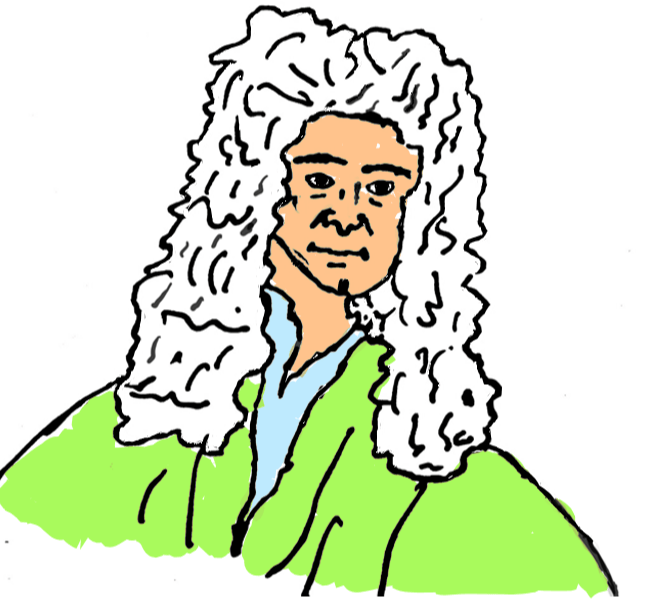
Isaac Newton was born in England in 1642, around the same time Galileo died. So one can say that Galileo passed the torch to Newton. Regarded as the greatest scientist that ever walked the planet, Isaac Newton changed the world with his groundbreaking discoveries in physics, mathematics, and optics that still shape modern science. His achievements include:
- Newton created the core rules for how objects move, dealing with inertia, force, and equal reactions. These are known as his three laws of motion.
- He proved that an invisible force, called gravity, pulls objects on Earth and keeps planets moving around the Sun. This is called the law of Universal Gravitation.
- In 1687, Newton published a book called Principia that laid down the rules of classical mechanics. Principia is often regarded as the most important science book of all times.
- He independently invented Calculus— a new branch of mathematics to help solve complex problems involving speed and motion.
- He used a glass prism to show that white light is actually a mix of all the colors of the rainbow.
- He built a new type of telescope using mirrors instead of lenses to fix blurry color distortions.
Newton’s laws of motion govern many modern technologies such as vehicle design, rocket design, robotics, satellite navigation, so and so forth.
Charles Darwin (1809-1882)
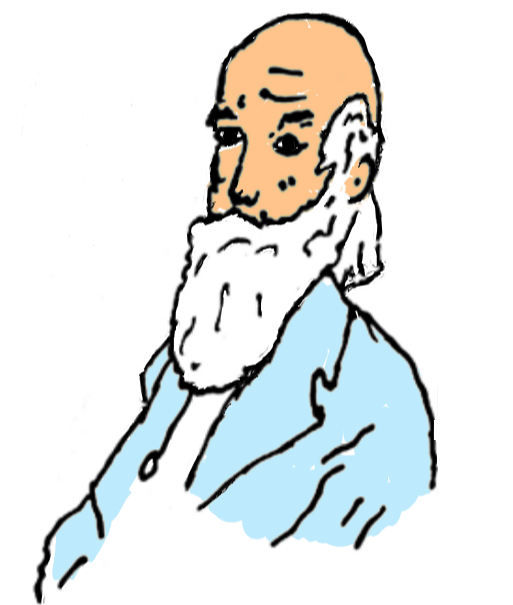
Charles Darwin was an English naturalist, geologist, and biologist. Known as the father of evolution, Charles Darwin brought a revolution in modern science by developing the theory of evolution by natural selection. Below is a list of his scientific achievements:
- From 1831 to 1836, he served as a naturalist on a five-year global expedition on a voyage with HMS Beagle. During the voyage, he gathered crucial geological and biological data in South America and the Galápagos Islands. Though he wasn’t the first person to visit those remote areas of the planet, his scientific work proved to have the greatest impact.
- In 1859, Charles Darwin published his book On the Origin of Species, which is regarded as the most published and translated book in the history of science.
- He published highly regarded early scientific works on the formation of coral reefs and an exhaustive eight-year study on barnacles, earning him the Royal Medal from the Royal Society.
- In his groundbreaking Theory of Evolution by Natural Selection, Darwin explained that all life descends from common ancestors and changes over time. Organisms with traits best suited to their environment are more likely to survive and reproduce.
Darwin’s theory opened a pathway for genetic engineering, enabling us to create desired biological matter such as enzymes, antibodies, and vaccines.
Micheal Faraday (1791-1867)
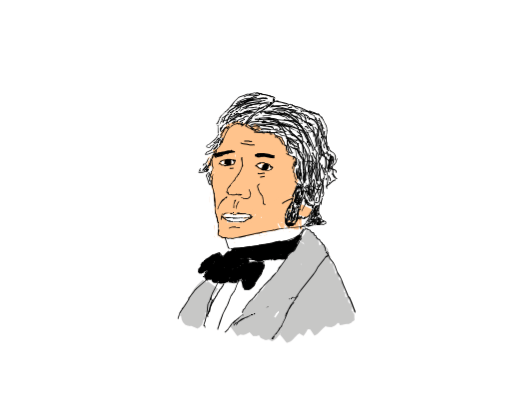
Micheal Faraday was an English physicist and chemist who contributed vastly to the fields of electrochemistry and electromagnetism. He didn’t have any formal education, yet he went on to become a great scientist of his time. His scientific achievements include:
- Faraday discovered that a changing magnetic field produces an electric current, leading directly to the invention of the electric generator and transformer.
- He invented early electromagnetic rotary devices, forming the basis of all modern electric motor technology.
- He established the conceptual foundation of “lines of force” and fields, which later enabled James Clerk Maxwell to formulate classical electromagnetic theory.
- He proved that a magnetic field can rotate the plane of polarization of light, showing a direct link between light and magnetism. This is known as the Faraday Effect.
- He discovered that certain materials are repelled by a magnetic field. He named this property as diamagnetism.
- Faraday isolated and described benzene, opening a major new branch of organic chemistry.
- He successfully liquefied gases like chlorine and carbon dioxide, proving that gases are just low-boiling-point vapor states of liquids. This is what enables us to transport Liquid Petroleum Gas (LPG ) as a fuel.
Modern life depends a lot on electricity. And electricity owes a lot to Michael Faraday. From electric motors to transformers, Faraday’s experiments were fundamental to electrical technology.
Marie Curie (1867-1934)
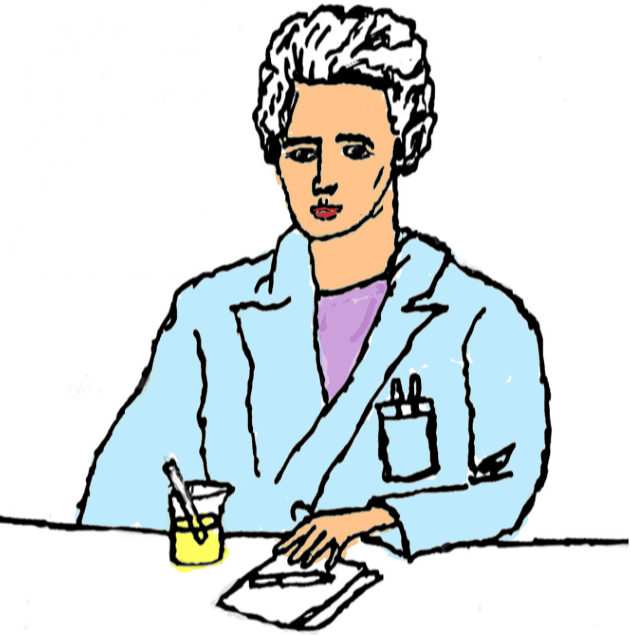
Marie Curie was born in Poland but later moved to France for studies. She is undoubtedly the most influential woman in science. Working as both physicist and chemist, she was the first woman to win a Nobel Prize, and the only person to receive a Nobel Prizes in two different scientific fields. She was also the first female professor to teach at the University of Paris. Her scientific achievements include:
- Along with her husband Pierre Curie, Marie discovered two new elements. She named one of them Polonium in the name of her homeland Poland, while the other was called Radium.
- She studied uranium rays and coined the term radioactivity.
- She successfully isolated pure radium and proved that radioactive radiation comes from deep within atoms themselves.
- During World War One, She developed and equipped mobile radiological cars (known as “Little Curies”) to help battlefield surgeons locate shrapnel in wounded soldiers.
While Curie’s work on radioactive elements was instrumental for nuclear technology, her research also led to radiation therapy, medical imaging and cancer treatment.
Albert Einstein (1879-1955)
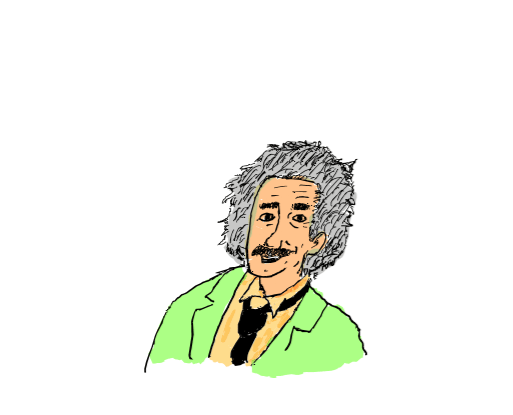
Widely regarded as the most intelligent human of all times, Albert Einstein was a German physicist who is known as the father of modern physics. His theories of relativity completely changed our understanding of space, time, and gravity. His main scientific achievements include:
- Einstein proved that the speed of light is constant and that time and space change depending on how fast you move. This is known as special relativity.
- With his famous equation E= mc 2 , Einstein proved that energy and mass are the same thing, meaning a small amount of matter holds a massive amount of energy. The world saw its manifestation during World War Two when the United States dropped nuclear bombs on the Japanese cities of Hiroshima and Nagasaki.
- He proved that light could behave as both a wave and a stream of particles (photons). This phenomenon is known as the Photoelectric Effect. For this discovery, Einstein received the 1921 Nobel Prize as well.
- His mathematical proof of the random movement of particles in a fluid confirmed the physical existence of atoms and molecules. This is called Brownian Motion.
- Through his Theory of General Relativity, Einstein showed that heavy objects like planets and stars warp and curve the fabric of space-time, creating what we feel as a gravitational pull.
Einstein’s theoretical concepts govern many modern technologies including GPS navigation, laser technology, solar cells, nuclear energy etc.
 TnA School